

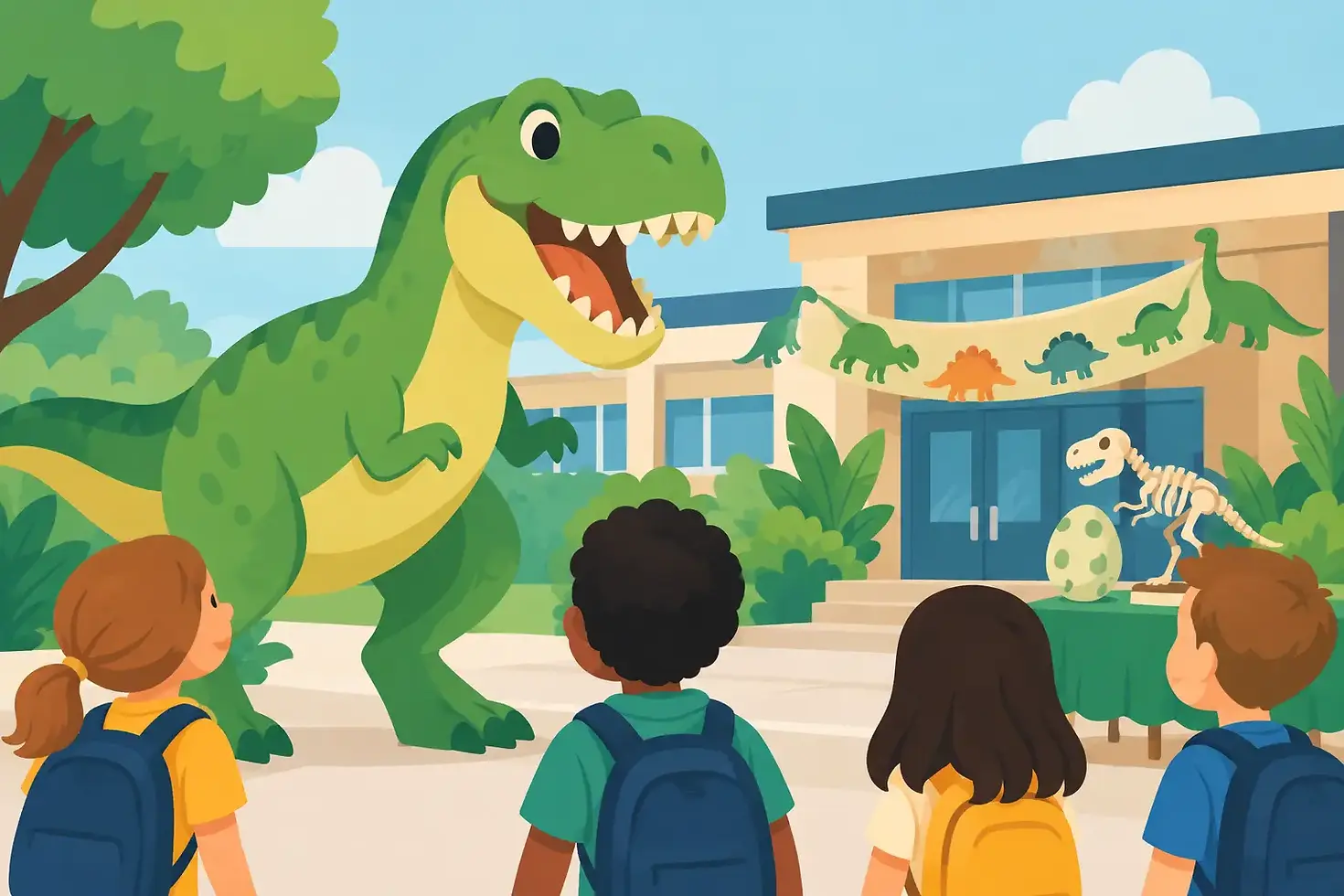
How to Plan a School Dinosaur Day That Roars
A hallway full of tiny paleontologists is exciting. A hallway full of tiny paleontologists all heading to the same activity at once is a traffic jam. The difference comes down to planning. When you plan a school dinosaur day, the goal is not simply to add dinosaur decorations and call it educational. It is to build a high-energy experience where students can move, wonder, create, and learn without leaving teachers to manage chaos.
Dinosaurs work because they meet students where their curiosity already lives. They spark questions about fossils, habitats, extinction, adaptation, and scale. They also give schools a rare chance to bring multiple grade levels together around one theme while still making each activity age-appropriate.
Start With One Big Dinosaur Day Goal
Before choosing crafts, costumes, or entertainment, decide what success looks like for your school. A dinosaur day can celebrate a science unit, support a reading initiative, reward students for positive behavior, help welcome families to campus, or create a standout fundraising event. Each purpose changes the schedule and the best mix of activities.
For a learning-focused day, teachers may want station guides, vocabulary prompts, and follow-up classroom work. For a family event, the priority may be arrival flow, photo opportunities, and activities that adults and younger siblings can enjoy together. A school spirit celebration can lean more heavily into music, costumes, and larger-than-life moments.
Choose one primary goal and two supporting goals. For example: reinforce earth science, give every student one hands-on activity, and create a shareable family photo moment. This simple decision keeps the event from becoming a collection of unrelated dinosaur ideas.
Build a Schedule That Gives Every Student a Turn
The strongest school events feel exciting without feeling rushed. Start by estimating how many students will attend, how long each grade can be away from class, and which spaces are available. The gym, cafeteria, library, auditorium, blacktop, and outdoor field can all play different roles.
For an elementary school, rotating groups through stations every 20 to 30 minutes often works well. Older students may stay engaged longer with science demonstrations, creative challenges, or a fossil analysis activity. Leave transition time between rotations. Five minutes can be the difference between an orderly changeover and a day where every station starts late.
A simple event flow might include a welcome assembly, grade-level rotations, lunch, and a final all-school reveal or parade. If a live dinosaur experience is part of the plan, schedule it at times when groups can see and hear clearly. A close encounter loses impact when the audience is too large or the room is too noisy.
Also plan for the students who need a quieter path through the day. Offer a low-sensory activity area in the library or another calm room, and communicate that option to staff and families ahead of time. Big excitement should be available to everyone, not mandatory in exactly the same format.
Create Stations With a Job to Do
Not every activity needs to be complicated, but every station should have a purpose. Variety matters because dinosaur fans do not all engage in the same way. Some want to touch and build. Others want to draw, perform, investigate, or ask a very serious question about whether a T. rex could beat a triceratops.
A balanced dinosaur day may include these experiences:
A fossil dig where students brush away sand to uncover replica bones or identify fossil images.
A science station comparing herbivores, carnivores, footprints, eggs, and prehistoric habitats.
A maker table for dinosaur masks, paper fossils, or build-your-own habitat scenes.
A movement zone with dinosaur walks, egg-and-spoon relays, or a “migrate to safety” game.
A reading corner with dinosaur books, fact cards, and short student-led trivia challenges.
A photo moment with themed props, a prehistoric backdrop, or a roaming dinosaur guest.
Keep instructions visible and short. One sign should tell students what to do, one adult or student helper should explain the rules, and one clear reset procedure should prepare the station for the next group. If an activity requires long explanations, it may be better suited for a classroom lesson than a fast-moving event day.
Make the Live Moment Feel Special, Not Scary
A live dinosaur can turn a good theme day into the story students retell all year. It also needs thoughtful staging. Schools should decide whether the encounter is best as an assembly feature, a small-group appearance, a hallway surprise, or a family-night attraction.
Set expectations before the dinosaur arrives. Teachers can explain that the performer is there for fun, that students should stay with their class, and that they do not need to approach if they would rather watch from a distance. This is especially helpful for younger students and anyone sensitive to sound, unexpected movement, or large characters.
Give the dinosaur a defined performance area with a clear boundary. Staff should manage the audience while the performer focuses on interaction. For photos, create a short, organized line instead of letting a crowd form around the character. A simple “one group, one photo, then exit” process protects the experience for everyone.
For schools seeking a polished centerpiece, Digisnaps can bring a Live Dinosaur Experience into a broader day of interactive entertainment. The best fit depends on the venue, student ages, event timing, and whether the school wants a learning-forward presentation or a high-energy celebration.
Put Safety and Operations Behind the Fun
Students should remember the roar, the fossils, and the giant footprints - not the logistics. Still, logistics are what make the fun possible. Confirm arrival and load-in procedures with every vendor, identify power needs, and make sure activity spaces do not block emergency exits or regular campus traffic.
Assign one event lead, one school operations contact, and one point person for each major zone. Staff and volunteers need a quick briefing that covers the schedule, restroom procedures, student supervision, allergy considerations, weather backup plans, and how to reach the event lead.
If food is part of the day, keep it simple and clearly labeled. Dinosaur-themed snacks are fun, but schools should follow their existing food and allergy policies rather than adding unnecessary complexity. A themed menu is optional. A well-run event is not.
It is also wise to confirm accessibility early. Can students using mobility devices reach every station? Is there a seated version of movement activities? Are visual instructions available for students who benefit from them? Small adjustments create a day where more students can fully participate.
Give Teachers Easy Ways to Extend the Learning
A dinosaur day has more value when it does not end at dismissal. Give teachers a short menu of follow-up prompts they can use without adding major prep. Kindergarten classes might sort dinosaurs by size or habitat. Upper elementary students can compare fossil evidence with popular dinosaur myths. Middle school students can debate what makes a scientific claim reliable.
Ask each class to create one takeaway: a fact card, a drawing, a short reflection, or a list of questions they still have. Displaying these in the hallway turns the event into a visible celebration of student thinking. It also gives families something meaningful to see at pickup or during a later open house.
Photos can support that extension, too. A themed photo booth or backdrop gives teachers a quick visual record of the day and gives families a moment worth sharing. Be sure the school follows its usual photo permissions and communication policies before posting or distributing images.
Promote the Experience Without Overpromising
A dinosaur day should feel like an event before the first footprint hits the floor. Build anticipation with a countdown in morning announcements, a “mystery fossil” clue campaign, classroom door decorations, or a spirit-day invitation to wear dinosaur colors. Keep the messaging clear about what students should bring, wear, or expect.
For family events, tell parents whether the experience is drop-in or timed, whether photos are available, and whether younger siblings are welcome. A few practical details reduce day-of questions and let guests focus on the fun.
The best dinosaur day has a little mystery, plenty of movement, and enough structure that every student gets a real moment in the action. Plan the experience around curiosity first, then let the prehistoric magic do the rest.


Comments